Handloom sarees above ₹4,000 — pure Chiniya silk, jamdani and zari Banarasi.
The pieces where the weaving is the point.
Shop by Category
Latest Arrivals


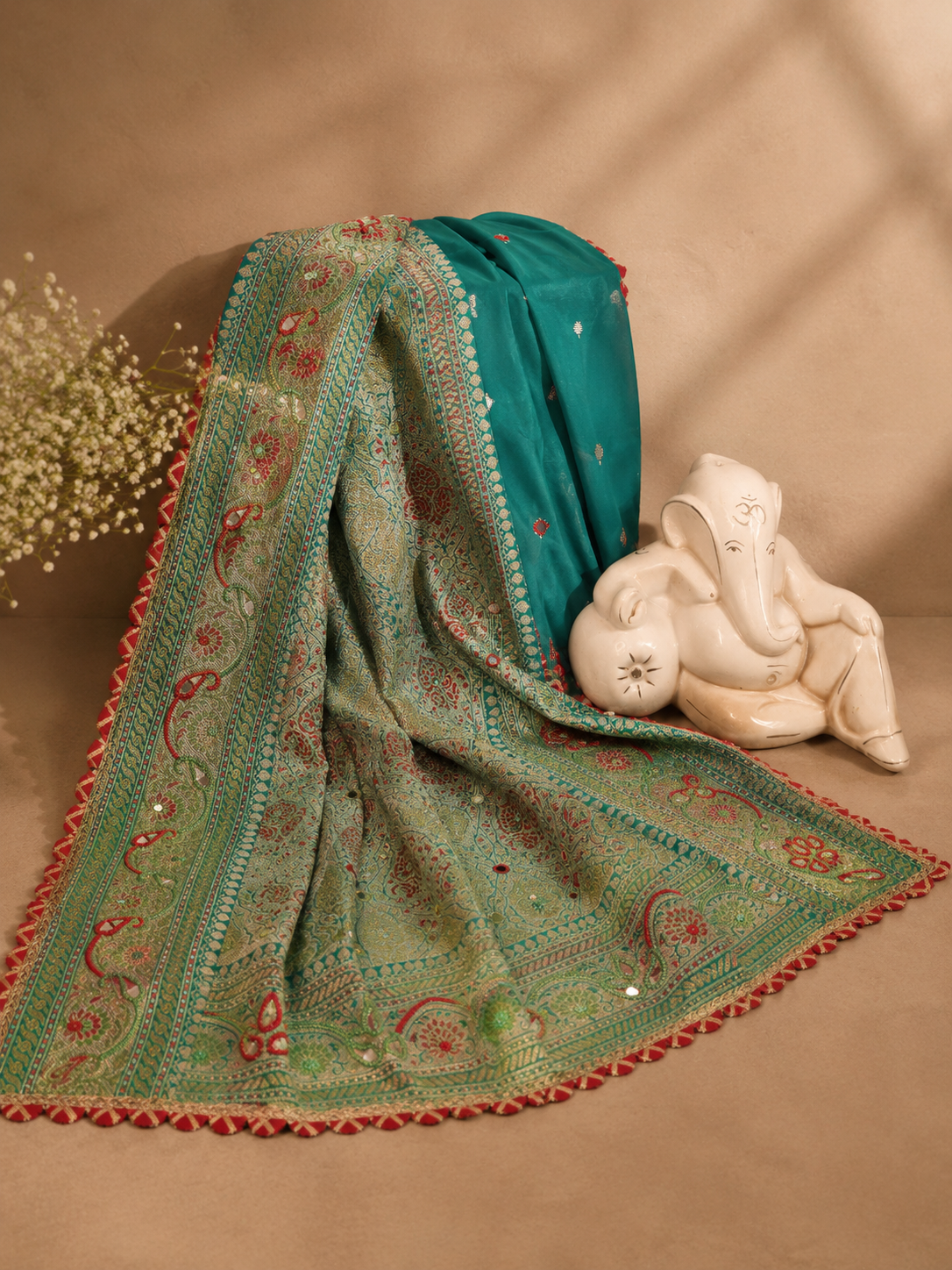


Handloom Sarees Above ₹4,000
The pieces where the weaving itself is the point — pure Chiniya silk from Banaras, handwoven jamdani, and Banarasi with real woven zari.
Where the money goes
Almost entirely into labour and yarn, not into branding. A jamdani saree represents weeks at the loom because every motif is laid in by hand with a bamboo needle — there is no machine assistance at any stage of the patterning. A pure Chiniya silk costs what it does because mulberry silk yarn costs what it does. A Banarasi with real zari carries actual flattened metal wrapped around silk thread, not metallised polyester.
These are the pieces people keep, pass on, and wear to the occasions that matter.
How to check you are getting what you paid for
- Turn the saree over. Handwoven supplementary weft leaves visible thread floats on the reverse. Machine and printed work does not.
- Real zari has depth and tonal variation. Plastic zari is uniformly bright and feels sharp.
- Nothing repeats exactly on genuinely hand-laid work.
- Pure silk warms in your hand within seconds. Synthetics stay cool.
Care
Dry clean only — water tarnishes zari permanently and dulls silk. Iron on the lowest setting with a cotton cloth between. Store folded in cotton or muslin, never plastic, and refold along a different line every few months so zari never cracks along a set crease.
Each saree is one of a kind — when it sells, it comes off the site. Free shipping across India, 7-day exchange.
Also see: ₹2,500–₹4,000 and under ₹2,500.


